
Prophet, Co-Pilot, or Mascot?
Three visions of Jesus in US Christianity

In a recent piece, journalist Bob Smietana has reported on US pastors who have supported recent ICE actions. One of those pastors made a statement that surprised me.
Joe Rigney initially became a prominent leader in Reformed pastor John Piper’s circles. He is now affiliated with neo-Confederate pastor Doug Wilson’s college in Idaho and notably wrote a 2025 book denouncing “the sin of empathy.”
In Smietana’s article, Rigney is quoted as one of most radical pro-ICE and anti-immigration pastors, calling for a 30-year ban on all immigration to the US and describing the US as “being overrun by foreigners.” Rigney sees this as a “judgment” from God for the decline in religious affiliation in the US.
There’s nothing shocking about any of that. Politicians like David Duke and Pat Buchanan have been saying things like this for decades, finding some percentage of the population who agree with them.
What was surprising is that Rigney, unlike anyone else quoted in the article, responded to supposed cultural “balkanization” by invoking Jesus: “Jesus,” Rigney said, “is the only hope of finding a cultural core.”

That got me thinking about who or what exactly Rigney means by “Jesus.” Does he read the Gospels and think that Jesus of Nazareth was walking around thinking “there are just too many foreigners in Galilee these days” or being offended that Samaritans or Greeks lived in or travelled through his homeland? To state the obvious, Rigney’s anti-immigration “Jesus” seems incompatible with some of the most well-known and strident statements that the Jesus described in the Gospels made about neighbors. He’s not exactly talking about that guy.
He is talking about one of the most popular images of Jesus in US history and culture, though. By understanding this and two other images of Jesus, we can shed light on both Rigney’s political theology and the ways many other people use Christianity in public. I think there are three major public images of Jesus in the US, which all have roots in the broader history of Christianity: Jesus as egalitarian prophet and teacher, Jesus as personal co-pilot or companion, and Jesus as powerful mascot or superhero. Christians in our society don’t necessarily believe in only one of these Jesuses, but they do typically emphasize one over the others. When Rigney invokes Jesus as a kind of cultural mascot, he is tapping into one of these long-standing traditions.
Of course, there have been countless versions of Jesus, shaped by different times and cultures. (Jaroslav Pelikan’s Jesus Through the Centuries and Elizabeth Johnson’s Consider Jesus are good introductions to many of these.) In our time and place, though, these three are particular images of Jesus that have become most prominent.
Jesus as Egalitarian Prophet/Teacher
This image of Jesus has deep biblical roots. Jesus claimed the lineage of the biblical Law and Prophets, and figures like Moses and the Hebrew prophets have connected with the vision of Jesus as a revolutionary or reformer. From Mary’s Magnificat “casting down the mighty from their thrones” to Jesus’s proclamation of good news for the poor and freedom for the captives to the “last will be first” message of Jesus’s teaching in the Sermon on the Mount to Jesus’s repeated inclusion of ethnic outsiders to the image of the crucifixion as a lynching, the Gospels provide plenty of reinforcement of this image of Jesus.
Historically, 19th century abolitionists, both Black and white, drew on this image of Jesus. In the decades after the US Civil War, Christians pushing for social reforms developed the idea that the Kingdom of God that Jesus preached could (and should!) be partially realized through making society more just and equal.
From Christian socialist radicals like George Herron, Vida Scudder, and Reverdy Ransom to more mainstream voices like Walter Rauschenbusch and Shailer Mathews, those who promoted “Social Christianity” (sometimes called the Social Gospel) believed that they needed to resurrect the long-hidden message that Jesus confronted powerful elites. Their theologies and political viewpoints varied, but they agreed that the egalitarian teachings and example of Jesus were the crucial truth about him that their society needed.
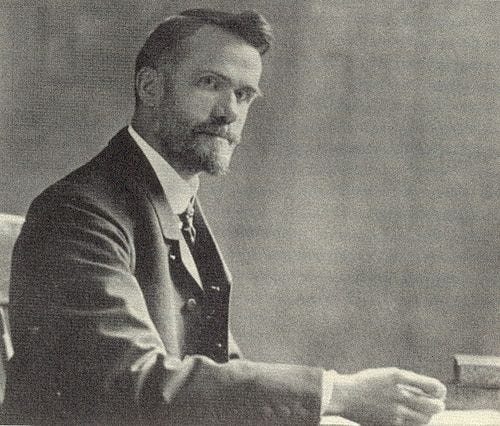
This kind of Christianity was incredibly successful. New Deal programs like Social Security and social changes like those created by the Civil Rights Movement probably wouldn’t have happened without the influence of diverse forms of Social Christianity, in both white and Black churches.
Today, people point to politicians like Raphael Warnock, Alexandria Ocasio-Cortez, and James Talarico as heirs to the image of Jesus developed by these traditions. But I think it’s even more important to notice the broad grassroots support that this image of Jesus has: nurtured in countless congregations and activist organizations, it can mobilize thousands of people to suddenly show up at airports to protest a ban on people from majority-Muslim countries or to block deportations in Chicago or Minneapolis by rapidly flooding the streets.
While deluded conspiracy theorists point to “George Soros-funded protestors,” handmade signs at actual protests frequently cite a different Jewish figure as a real force driving tens of millions of people to support an egalitarian politics: Jesus as a prophet and teacher.
Jesus as Personal Co-Pilot/Companion
Another image of Jesus is less obvious in biblical writings: Jesus as a personal companion, walking alongside and communicating with each person in their every experience. Obviously, Jesus’s disciples could have had something like this experience, and Paul testifies to wanting to “know Christ” in a deep way (although that seems tied to the experience of suffering for him).
This image of Jesus was developed more by medieval mystics, who had ecstatic and often almost-sexual visions of their close relationship to Jesus. During the 19th century, revivalist preachers and holiness churches sometimes developed similar experiences.
Probably the key influence that popularized this vision of Jesus was the Keswick Movement (also known as the “Higher Life Movement”). As historian George Marsden noted, Keswick spiritual life had a broad influence on US Fundamentalist Christianity. Keswick spirituality (named after the English town where an annual convention promoted this spirituality) emphasized a continuing experience of being made holy in one’s internal experience.
The most prominent voice for this image of Jesus as a close personal companion was an evangelist whose approach to Christianity was shaped by Keswick spirituality early in his career: Billy Graham. For Graham, the most important thing in life was to have a relationship with Jesus Christ as one’s “personal Lord and Savior.”

In the decades after Graham’s influence spread, the phrase “personal relationship with Jesus Christ” became popular, first appearing in published books during the 1960s then peaking in influence around 2010, according to Google’s ngram viewer. Of course, many others (notably including ministry leader Bill Bright) promoted this vision of Jesus that, in my forthcoming book, I call “evangelical individualism.”
For Graham and others, this vision of Jesus as a personal companion pushed back against the Social Christianity view of Jesus as a prophet. In a 1957 Newsweek article, Graham minimized the importance of social or political reform efforts, arguing that society is “made up of individuals” and that “until the individuals have been changed, it is impossible to have a better society.”
For Graham and many other evangelical individualists, the real key to changing society was changing individual hearts by bringing them into an emotional relationship with Jesus Christ as “personal Lord and Savior.”
Perhaps no public figure exemplified this more clearly than George W. Bush, who testified that Jesus had personally changed his life and saved him from alcoholism. Bush’s “compassionate conservative” policies consistently aimed at unleashing individual freedom and empowering people, from US schoolchildren to undocumented immigrants to Iraqi citizens, to experience their own personal liberation.
Whether or not these policies were effective, they cohered with Graham’s vision of changing individual lives through private sector, “faith-based” solutions that could inspire a personal relationship with Jesus. Public institutions, from the US government to the regimes of the “Axis of Evil,” simply had to get out of the way (or be removed) for this to happen. Jesus as co-pilot or spiritual companion could transform the life of anyone from a national leader to a desperate addict.
Jesus as Powerful Mascot/Superhero
This last image of Jesus is the one that has probably been most popular historically. From the disciples wanting Jesus to call down fire from heaven on his enemies to Constantine seeing a vision of the cross and the message “in this sign, conquer” to charismatic healing evangelists proclaiming the power of Jesus, many Christian leaders have promoted Jesus as a symbol of might. Jesus, in this vision, offers so much winning you might get tired of winning.
In the Gospels, this version of Jesus is seen casting out demons and proclaming a Kingdom of God. People who view Jesus as an egalitarian prophet would argue that “Jesus as superhero” ignores the content of his teaching of the Kingdom and the context of his casting out demons. But the pieces for this power-based version of Jesus are clearly there in the Gospels.
During the early centuries of Christianity, the dominant idea about salvation, which theologians call a “Christus Victor” atonement theology, also reflected this vision. Jesus was commonly portrayed as a conquering hero who had defeated evil powers such as the devil, sin, and death through his resurrection.
Politically, this Jesus became quite useful, as whole nations (beginning with Armenia) converted to Christianity once their kings became convinced that Jesus was the powerful force that Christian missionaries proclaimed him to be. In turn, the name of Jesus and church institutions in both the Orthodox East and the Catholic West propped up the legitimacy of monarchs and even whole social orders.
Over the last century, this vision of Jesus has seen a resurgence around the world, largely through Pentecostal or charismatic forms of Christianity. In places like Zambia, national leaders have brought entire nations under the power of this Jesus. In other countries, like Nigeria, Brazil, and the US, this vision of domination by particular forms of Christianity has caused conflict with Muslim, secular, and Christian citizens who do not share its assumptions.

There are different forms of this image of Jesus as superhero or cultural mascot, though. For televangelist and presidential advisor Paula White-Cain, Jesus is seen through a charismatic lens of divine anointing that conflicts with demonic forces. For Joe Rigney (and others like Elon Musk and, shockingly, even the renowned atheist Richard Dawkins), Jesus serves as a mascot for a certain kind of manly “Western civilization” that needs to protect itself from Islamic or dark-skinned peoples. Among other things, this latter version of Jesus as mascot echoes the German cultural Protestantism that wielded an “Aryan” Jesus against the supposed threat of “Judeo-Bolshevism” almost a century ago.
The distinction between these two racial visions—between White-Cain’s long history of leading multiracial churches and attracting Black audiences while submitting to the authority of an African apostle versus the unabashedly white supremacist views promoted by people like Musk, for instance in his recent comments inciting racist pogroms in Northern Ireland—shows how malleable this vision of Jesus as mascot or superhero can be. To rephrase the title of the Depeche Mode song, Jesus as mascot offers your own impersonal Jesus, who can support just about any cause.
Conclusion
Jesus’s question “who do you say that I am?” continues to attract divergent answers today, answers that are shaping human societies around the world.
In the last chapter of my forthcoming book, I describe how New Apostolic Reformation (NAR) political theology fits into this mix: Like the Social Gospel theology of the Kingdom of God, NAR charismatics have developed their own theology of the Kingdom of God, but they offer differing approaches to what this Kingdom is. For the Social Gospel, the Kingdom is an ethical category that points toward an egalitarian society that was modeled by Jesus. But the NAR theology of the Kingdom envisions Jesus (and his followers) as sources of power and domination, who remake the world through defeating demonic beings.
At the same time, NAR political theology contrasts with the “personal relationship” emphasis of evangelical individualism. While holding some of the same beliefs as Billy Graham or George W. Bush (who they strongly supported) NAR leaders have developed a sharply different approach to political life. Rather than promoting individual freedom or changed hearts, they have mainly focused on winning supremacy over nations and ethnic groups. There is a long story behind how they took this direction that winds through the Philippines, Guatemala, and Argentina, among other places.
All that to say, when Joe Rigney invokes Jesus as a mascot for the cultural unity of Western civilization, he is tapping into one of the most prominent visions of Jesus throughout history. He might be drastically misreading (or perhaps not reading) the Gospels, but he’s doing something that others have done before him.
Nicely done, and well thought out.
Fascinating and so helpful. Thank you!